Virginia’s extreme summer heat can put even a properly operating residential cooling system under considerable stress. During the hottest afternoon hours, an air conditioner or heat pump may run for long stretches—or nearly continuously—while the indoor temperature slowly rises above the thermostat setting.
That does not automatically mean the system is broken.
Residential cooling systems are generally selected around local design conditions, not the most extreme temperature ever recorded. Those unusually severe conditions occur during only a small percentage of the year. When outdoor temperatures exceed normal design conditions, the system may have less excess capacity available to cool the house quickly or recover from added heat. The Air Conditioning Contractors of America explains how design temperatures and cooling loads affect equipment selection.
What may be normal during extreme heat
Depending on the house and equipment, homeowners may notice:
- Much longer operating cycles
- Little or no cycling during the hottest part of the day
- Slower recovery after raising the thermostat
- A second floor that is warmer than the first
- Indoor temperature drifting a few degrees above the thermostat setting
- More difficulty in rooms with large windows, vaulted ceilings, air leakage, or limited insulation
A heat pump operates much like a conventional central air conditioner when it is in cooling mode. Despite its name, a heat pump is not inherently less capable of cooling a home.
Long runtime can actually be more appropriate than rapid on-and-off cycling during extreme conditions. The important question is whether the system is still producing cool air, managing indoor humidity reasonably well, and preventing the house from becoming progressively warmer.
Warning signs that deserve attention
Consider contacting a qualified HVAC technician if you observe any of the following:
- Supply air that does not feel noticeably cooler than the room air
- Indoor temperatures that keep rising after outdoor conditions moderate
- Frequent, very short operating cycles
- Ice on the indoor coil or refrigerant lines
- Water collecting around the indoor equipment
- Repeatedly tripped circuit breakers
- Unusual mechanical noises or electrical odors
- A sudden, significant loss of cooling or persistent excessive humidity
These observations do not identify a specific defect by themselves. Refrigerant charge, airflow, electrical components, duct performance, and equipment condition require evaluation by an HVAC professional.
Eight practical steps homeowners can take
- Check the air filter. A dirty filter restricts airflow and makes the system work harder. ENERGY STAR recommends checking filters monthly during periods of heavy use. Review ENERGY STAR’s heating and cooling guidance.
- Keep supply and return openings clear. Furniture, rugs, curtains, and closed registers can interfere with airflow.
- Look around the outdoor unit. Remove leaves, vegetation, or debris that could restrict airflow, but leave internal cleaning and repairs to a technician.
- Close blinds and curtains. Reducing direct solar gain can make a meaningful difference, particularly on west-facing windows during the afternoon.
- Limit indoor heat production. If practical, postpone using ovens, clothes dryers, and other heat-producing appliances until later in the day.
- Use ceiling fans in occupied rooms. Fans do not lower the room’s temperature, but moving air can improve comfort. Turn them off when the room is vacant.
- Keep the thermostat reasonably steady. Turning it dramatically lower will not make a conventional system cool faster. It may simply cause it to run longer.
- Use the “Auto” fan setting in most homes. This allows the blower to cycle with the cooling system and can help control humidity. Follow any specific guidance from your HVAC or indoor-air-quality professional.
Dirty outdoor coils and other maintenance problems can also reduce cooling capacity and cause longer runtime. ENERGY STAR recommends professional service and routine system maintenance, particularly before peak cooling season.
The house matters as much as the equipment
Cooling performance is not determined by the HVAC equipment alone. Insulation, air sealing, windows, solar exposure, duct leakage, attic temperatures, and the home’s original design all influence comfort.
A larger air conditioner is not automatically the answer. Oversized equipment can cycle too quickly under normal conditions, potentially affecting humidity control, comfort, equipment life, and energy consumption. Proper equipment selection should be based on a professional load calculation.
What a home inspection can tell you
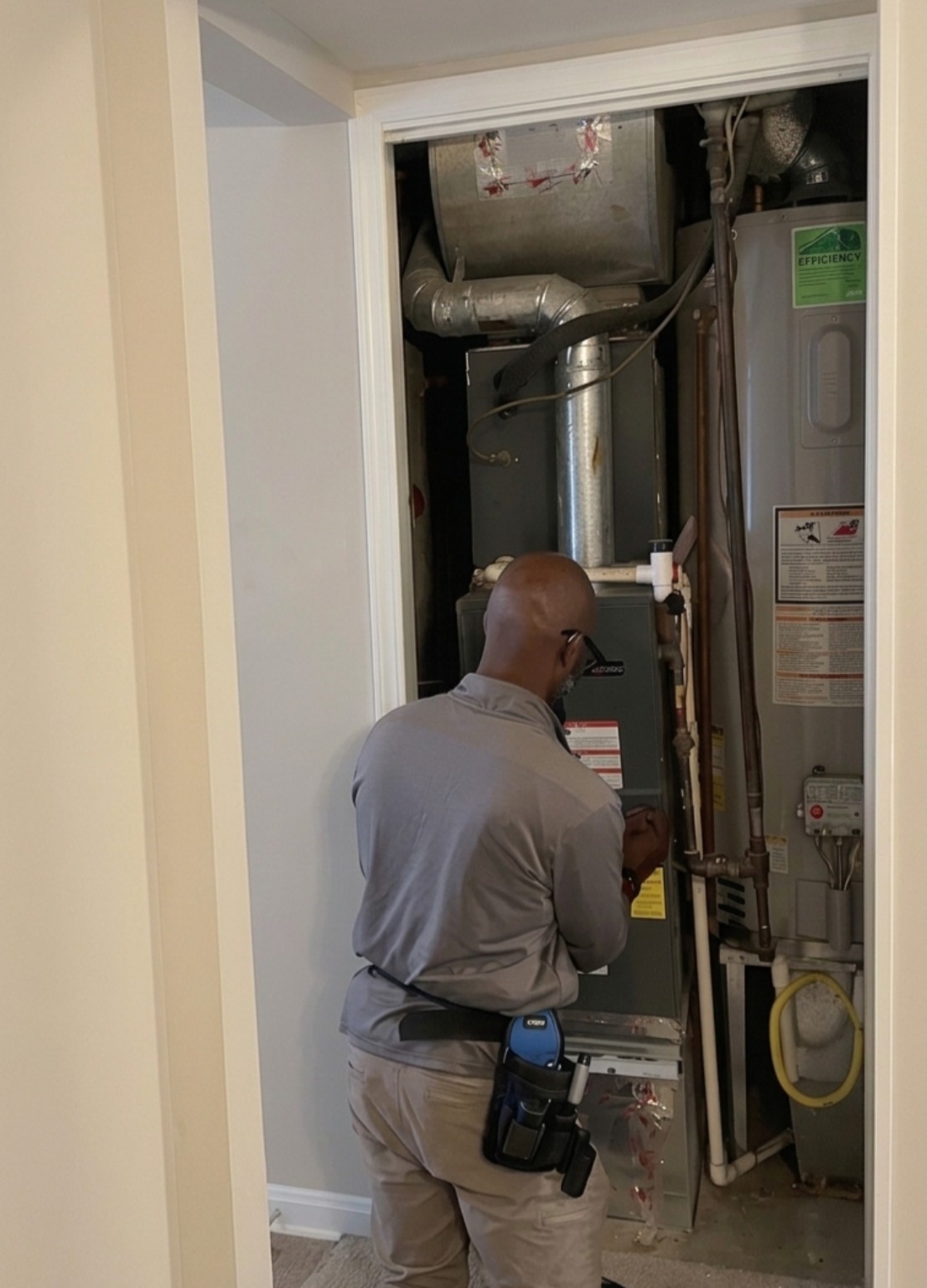
During a home inspection, the cooling system is operated using normal controls when weather and conditions permit. The inspection may identify visible equipment concerns, abnormal operation, temperature differences, drainage problems, or conditions suggesting that further evaluation is warranted.
Thermal imaging—included with every standard Intrinsic home inspection—can provide useful supporting information about temperature patterns. It does not see through walls or replace HVAC testing and diagnosis.
A home inspection is not an HVAC service call. When observations point toward a performance or equipment concern, the appropriate next step is evaluation by a qualified HVAC contractor.
Extreme weather asks more of both the cooling system and the building around it. Knowing the difference between understandable heat-related strain and a genuine warning sign can help homeowners respond calmly—and call the right professional when needed.
This article provides general educational information and is not a substitute for evaluation by a qualified HVAC professional.